Letter From a Victim
Description
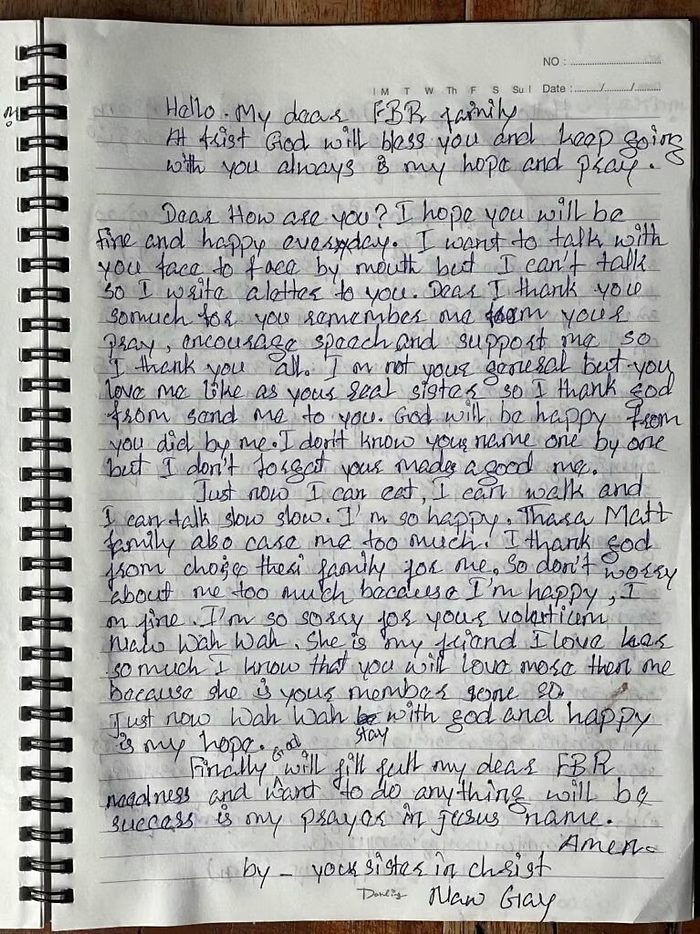
This handwritten letter was written by Karen medic Naw Gay in November 2025 while recovering from severe injuries sustained during a Burma Air Force firebomb attack. As the lone survivor, she suffered extensive burns and trauma and was unable to speak during treatment, making writing her only means of communication.
The letter expresses gratitude to the medical personnel and donors who supported her care. Written while heavily bandaged and in severe pain, it stands as a testament to resilience and the enduring impulse toward gratitude even in moments of extreme suffering.
Following the 2021 military coup in Myanmar, aerial attacks intensified in many resistance-held and civilian areas, including Karen and Karenni regions. Firebombing, artillery, and landmine contamination have severely disrupted local life and limited access to hospitals and other formal infrastructure.
In this environment, organizations like Free Burma Rangers have become critical providers of emergency care, evacuation, and humanitarian support. Naw Gay’s letter emerges from that wartime medical context and reflects both the violence of the conflict and the informal networks of care that sustain survivors.
AI Analysis
Method: OCR / handwritten text analysis and sentiment analysis
This artifact was compared across Tesseract, Gemini 2.5 Flash, and Gemini 3.1 Pro Preview, with WER and CER measured against manual ground truth transcription.
It was also run through sentence-level sentiment and rolling emotional arc analysis, including focused interpretation of gratitude versus grief across the letter. See consolidated results in the AI Analysis section.
Interpretation
What makes this letter especially powerful is that it does not frame survival in heroic or abstract terms. Instead, resilience appears through specific acts of relationship. The writer thanks caregivers, names a lost friend, and affirms faith despite bodily suffering. Naw Gay’s letter turns a moment of near-silencing into testimony.
The document also illustrates a central theme in this archive. Machine-readable text is not the same as human meaning. AI could recover portions of the writing, but the emotional and ethical force of the letter becomes clear only through close reading and context. Gratitude, mourning, and prayer coexist here, resisting reduction to a single tone or data point.